




















Genetically modified mosquitoes block malaria transmission cycle

USP study shows genetic alteration reduces the ability of Plasmodium falciparum to develop in mosquitoes and blocks malaria transmission

 12/09/2025 - Publicado há 8 meses

By: Editorial Staff*
Art by: Gustavo Radaelli**

Recipiente plástico grande e transparente onde estão dezenas de mosquitos geneticamente modificados. O recipiente está coberto por um tecido respirável e é segurado pelas mãos de um homem, que usa camisa xadrez em tons de azul. Ao fundo aparecem outros recipientes dispostos em prateleiras metálicas

This method employs genetically modified mosquitoes to reduce mosquito populations or change them so they can no longer support parasite transmission – Photo: Marcos Santos/USP Images

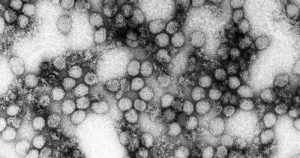
Malaria is transmitted by mosquitoes of the Anopheles genus, which bite infected people and ingest blood containing the Plasmodium parasite. To infect another human, the parasite must first complete part of its life cycle inside the mosquito, crossing the insect’s intestinal wall and reaching its salivary glands. The new research, published in Nature, disrupts this process by preventing the parasite from developing within the mosquito, thereby blocking transmission before it can reach humans.

The study was led by scientists from the University of California, San Diego, and Johns Hopkins University, with participation from professor Rodrigo Malavazi Corder of the Department of Parasitology at USP’s Institute of Biomedical Sciences (ICB).

The target of the intervention was a mosquito gene called FREP1 (Fibrinogen-Related Protein 1), which encodes a protein necessary for the parasite to cross the insect’s intestinal wall. Some mosquitoes naturally carry a variant of this gene, called FREP1Q, which slightly alters the protein, making it harder for Plasmodium falciparum, the species that causes the most severe form of malaria, to enter.


Resistant Mosquitoes

In the new study, researchers introduced this variant into another transmitting species, Anopheles stephensi, common in Asia and expanding in Africa. In laboratory tests, mosquitoes with the modification showed much lower infection rates and, when infected, carried significantly reduced amounts of parasites. The genetic change did not affect vital characteristics of the insect, such as longevity or reproductive capacity.

To spread the variant in the population, researchers used a technique called gene drive, which drastically increases the likelihood of a trait being inherited. “Normally, a gene has a 50% chance of being inherited by offspring. With gene drive, that probability can approach 100%,” explains Corder. “In the experiments, the frequency of mosquitoes with the variant rose from 25% to over 90% in just ten generations.”

ICB’s participation in the study involved developing mathematical models to describe the dynamics of the genetic variant’s spread. “My work focuses on mathematical modeling of biological systems,” says Corder.

Homem de cabelos e barbas escuros, usa óculos de armação arredondada e sorri. Veste camiseta branca e um casaco caramelo

Rodrigo Malavazi Corder - Photo: Personal archive

“In collaboration with John Marshall from the University of California, Berkeley, we worked with data generated from experiments with transgenic mosquitoes to understand the mechanisms governing the spread of the genetic trait in populations over several generations.”

In Brazil, the main malaria vector is Anopheles darlingi, predominant in the Amazon. It is still unknown whether the same FREP1 gene variant would have the same effect in this species. According to Corder, preliminary discussions are already underway to form a research group to investigate the potential of this approach with local mosquitoes and parasites.

According to the World Health Organization (WHO), in 2023 there were more than 260 million cases of malaria and nearly 600,000 deaths worldwide. Despite traditional methods such as insecticide-treated bed nets and early diagnosis and treatment, the global incidence of the disease has remained stagnant for about a decade.

 “That’s why new control methods are necessary. These genetic strategies are promising because they can reduce transmission capacity without having to eliminate mosquito populations – which tends to be less ecologically aggressive,” concludes Corder.

The article Driving a protective allele of the mosquito FREP1 gene to combat malaria is available at this link.

*From the ICB Communications Office, adapted for Jornal da USP

**Intern supervised by Moisés Dorado

English version: Nexus Traduções, edited by Denis Pacheco


Política de uso 
A reprodução de matérias e fotografias é livre mediante a citação do Jornal da USP e do autor. No caso dos arquivos de áudio, deverão constar dos créditos a Rádio USP e, em sendo explicitados, os autores. Para uso de arquivos de vídeo, esses créditos deverão mencionar a TV USP e, caso estejam explicitados, os autores. Fotos devem ser creditadas como USP Imagens e o nome do fotógrafo.