
















Blog
Brazilian scientists excavate caves in Romania in search of Neanderthals
Project led by USP researchers investigates the interaction between humans and their hominin relatives in Eastern Europe during the Stone Age
Romanian and Brazilian researchers work on the excavation of Cave 1, in the Vârghiş Gorge, Romania, in July 2025 – Photo: André Strauss
Brazilian scientists are excavating caves in the interior of Romania in search of clues about one of the most intriguing chapters in human evolutionary history: the relationships — sexual, cultural, and geographic — between Homo sapiens and Neanderthals. Since July 22, researchers have been working in two caves of a formation known as the Vârghiş Gorge, a small canyon in the central region of the country, which may have housed ancestral populations of both species. The first excavations have already yielded important finds: two fragments of animal bones over 42,000 years old that appear to have been modified by human hands. All work is being carried out in partnership with Romanian scientists.
Various scientific findings indicate that Homo sapiens and Homo neanderthalensis coexisted and interbred for thousands of years in different parts of Europe and Asia, mainly between 50,000 years ago — when anatomically modern humans began to populate the region — and 40,000 years ago, when the Neanderthal lineage became extinct. The legacy of this interbreeding remains in human DNA: research shows that between 1% and 4% of the genome of all people of non-African origin living today was inherited from Neanderthals. Yet many questions remain about how these interactions took place and to what extent they influenced the evolution of Homo sapiens.
Romania is a strategic location for advancing this research. Archaeological and genetic evidence confirms that anatomically modern humans and Neanderthals cohabited this region of Eastern Europe during the early Upper Paleolithic — the so-called Stone Age. One of the most important fossils related to this history was discovered in southwestern Romania in 2002: a Homo sapiens mandible, approximately 40,000 years old, with some Neanderthal morphological traits and up to 9% of its DNA derived from Homo neanderthalensis, according to a study published in 2015 in the journal Nature.
Neanderthals represent an extinct lineage of the genus Homo, which diverged from a common ancestor with modern humans around 500,000 years ago. While the lineage that gave rise to Homo sapiens developed in Africa, adapted to a predominantly warm climate and tropical landscapes, the lineage that gave rise to Homo neanderthalensis emerged mainly in Europe and Western Asia — the region known as Eurasia — and adapted to cold climates and mountainous terrain. As a result, Neanderthals developed a distinct anatomy: they were shorter, more robust, and had a more elongated skull than modern humans.
Neanderthals also mastered the use of fire, crafted stone tools, and expressed themselves artistically. Despite these abilities, they disappear from the fossil record around 40,000 years ago. Scientists believe their extinction resulted from a combination of factors, including competition with Homo sapiens, who emerged in Africa about 300,000 years ago and began migrating into Eurasia between 70,000 and 50,000 years ago.
Over millions of years of human evolutionary history, several hominin species appeared, but only Homo sapiens survived — giving rise to all modern humans today.
The Vârghiş Gorge is one of the most important archaeological and paleoanthropological research sites in Romania. A team led by researchers Marian Cosac and George Muratoreanu, from Valahia University of Târgoviște, has been working in the region since 2014 and has already unearthed numerous traces of prehistoric occupation in the valley’s caves, including dozens of stone tools from the so-called Mousterian industry — typically produced by Neanderthals — found alongside the bones of bears, lions, woolly rhinoceroses, and other extinct species from the Middle Paleolithic. The group’s excavations are concentrated in Peștera Mare, the largest cave in Vârghiş.
To date, however, no skeletal remains of these Neanderthal populations have been found in Romania — only stone tools and other archaeological artifacts left behind. Filling this gap is the ultimate challenge of the expedition. “It’s like looking for a needle in a haystack; but if you don’t look, you’ll never find it,” says researcher Walter Neves, senior professor and coordinator of the Research and Outreach Center for Human Evolution at the Institute of Advanced Studies (IEA) at USP, who leads the project.
Neves explains that the idea of searching for hominins in Romania came from a conversation with professor Stefan Vasile of the University of Bucharest, whom he met in 2019 while teaching a course in Dmanisi, in the Republic of Georgia — one of the world’s most important archaeological sites for the study of human evolution. “I had never considered establishing an archaeological mission in Romania, but then I started studying the history of the place and realized it was a hotspot for Neanderthal and sapiens interaction,” Neves recalled in an interview with Jornal da USP. “So I thought: hey, this is interesting!”
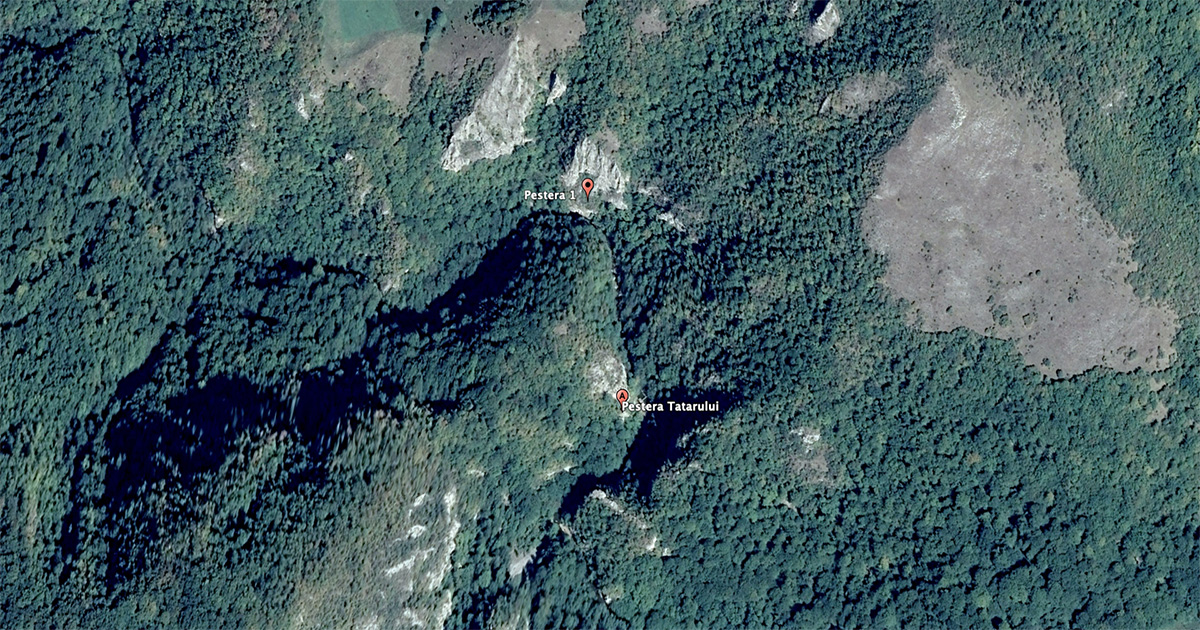
Contact with Vasile led to an invitation from Cosac and Muratoreanu for the Brazilian research group to join the Romanian team in excavations at the Vârghiş Gorge. In April 2024, a first joint reconnaissance mission of the valley’s caves was carried out. Four months later, the group conducted its first excavation in a cave called Tătarului (also known as Tătarilor), which had been selected during the previous trip.
Researchers from Brazil and Romania work on the excavation of Cave 1 in the Vârghiş Gorge, Romania – Photo: André Strauss
The Vârghiş River Valley, surrounded by the Carpathian Mountains, has more than one hundred caves scattered along the slopes of a limestone canyon, suitable for human occupation and fossil preservation. “It’s a very tempting place because it gives us the possibility to test several excavation sites,” Neves noted. The valley is located in Transylvania, a region known worldwide as the setting of the legend of Count Dracula.
“As with any archaeological excavation, it’s very difficult to know exactly what we’ll find. In the most optimistic scenario, a Neanderthal skeleton; or at least a tooth fragment,” said researcher André Strauss, professor at the Museum of Archaeology and Ethnology (MAE) and co-coordinator of the Laboratory of Environmental and Evolutionary Archaeology and Anthropology (LAAAE) at USP, who leads the excavations in Romania in collaboration with Romanian colleagues and other Brazilian institutions.
The project is funded by the São Paulo Research Foundation (Fapesp) and involves researchers from USP, São Paulo State University (Unesp), the University of Algarve in Portugal, Ohio State University in the United States, and the Universities of Bucharest and Târgoviște in Romania. Other Romanian institutions also take part in the excavation, along with a collaborator from Argentina and three students from Germany.
First Results
The first excavation in August 2024 was not very encouraging: the team dug a two-meter-deep hole in Tătarului and found no hominin bones or archaeological artifacts that could confirm a history of human occupation in the cave. However, radiocarbon dating later conducted on some animal bones discovered at the site indicated that the deepest layer of the pit was 42,000 years old, which encouraged the researchers to continue investing in the cave. “We decided to continue excavations at Tătarului in the hope that, by reaching deposits dated earlier than 45,000 years, we might find evidence of Neanderthal occupation,” explained Strauss. “It’s not time to give up,” Neves added.
The decision proved to be correct: in the first days of excavation, on July 24, the researchers found two fragments of animal bones — one from a horse and another from an unidentified species — that appear to have been modified by humans. “These two bones show several fracture patterns that we know are linked to human activity, especially two parallel incisions on the horse bone that very much resemble cut marks,” Strauss explained to Jornal da USP, emphasizing that these assessments are preliminary and need to be confirmed by more detailed laboratory analyses. Based on the soil layer in which these bones were found, it is possible to infer that they are over 42,000 years old. Whether the marks were made by Homo sapiens or Neanderthals remains unknown for now.
In parallel with the work at Tătarului, Brazilian and Romanian scientists began excavating a second cave, named Cave 1 (or Peșteră 1, in Romanian). According to Neves, this cavity has the advantage of being untouched, never disturbed by archaeologists, professionals, or amateurs. “I’m very optimistic about this cave. It has no disturbances,” he said. It is also an easily accessible site, close to Tătarului and on the banks of the Vârghiş River. “If access is easy for us, it’s likely it was also easy for hominins,” Neves added.
A fundamental question the project seeks to answer, according to Strauss, is which lineage of Homo neanderthalensis was present in this region and what its relationship was with population introgression processes in Homo sapiens — that is, with the genetic legacy Neanderthals left to modern humans. “For that, we need to extract DNA from bones or sediments,” explains the researcher, who specializes in the study of ancient DNA.
In addition to searching for Neanderthal bones and tools, scientists are also sifting through cave sediments for genetic traces of hominins who once lived there. For this, they use a technique known as environmental sedimentary DNA (sedaDNA), which allows sequencing and identification of genetic material preserved in the environment. Since the Homo neanderthalensis genome has already been sequenced by other research groups, scientists will be able to compare the environmental DNA sequences isolated from the Romanian caves with Neanderthal and human DNA sequences stored in databases to extract information from this material.
The sediments collected by the team will also play a key role in geoarchaeology studies, a field that combines concepts from geosciences and archaeology to investigate how archaeological sites were formed and transformed over time. “The goal is to study the formation processes of the deposits that fill the cavities, in which the layers containing archaeological material are found,” says researcher Ximena Villagran, professor at MAE and coordinator of the Microarchaeology Laboratory (LabMicro) at USP, who leads this research front of the project.
She explains that this data is essential to determine whether the materials collected by the team are remnants of an in situ occupation — that is, one that actually occurred inside the cave at the excavation site — or whether they were displaced and reworked by geological processes before being deposited there. “This analysis is fundamental for all subsequent interpretations made of the artifacts or bone remains, including the charcoal used for dating, as it allows us to understand the full context in which these objects were left, buried, transformed, or preserved,” says Villagran. “In addition to clarifying how the artifacts arrived at the sites, geoarchaeology provides insights to reconstruct the environment that existed during their occupation and how environmental changes influenced the preservation of the sites,” she adds.
Cranial Anatomy
Another research front associated with the project was a reanalysis of the morphology of hominin skulls found in Eastern Europe over the past decades, including three Homo sapiens skulls already excavated in Romania in caves outside the Vârghiş Valley. The Neanderthal features of these skulls were all very subtle, Neves emphasized. “In addition to the search for new materials, we analyzed the skulls already found to gain a clearer idea of the morphological variability of Neanderthals and sapiens in Eastern Europe,” he explained. Before heading to Romania, Neves and researcher Clóvis Monteiro stopped in Vienna, Austria, to measure a skull from the Mladeč caves in the Czech Republic. “I want to know to what extent this gene exchange affected the cranial morphology of modern humans,” Neves said. He planned to measure other skulls from the region in 2026.
According to Neves, the results of the expedition would be decisive in determining whether the project would be concluded or serve as the seed for a long-term archaeological mission in Romania. One of the most renowned archaeologists and bioanthropologists in Brazilian science, Neves officially retired as a professor from the Institute of Biosciences (IB) at USP in 2017, at the age of 60, but remained active at the Institute of Advanced Studies (IEA). Famous for his studies on Luzia’s people and the peopling of the Americas, he has recently focused on researching much older chapters of human evolution, which can only be explored outside Brazil through international collaborations.
“I don’t know how much longer I’ll be physically able to participate in field research like this,” said Neves, who is about to turn 68 and has some mobility difficulties. “But I’ll be satisfied knowing I’ve placed Brazil in the international jet set of paleoanthropology.”
Excavations in Romania took place until August 9. Jornal da USP followed the final days of fieldwork on site in the Vârghiş Gorge, with support from USP’s Office of the Provost for Cultural and Extension Affairs (PRCEU).
*Intern under the supervision of Moisés Dorado
English version: Nexus Traduções, edited by Denis Pacheco
A reprodução de matérias e fotografias é livre mediante a citação do Jornal da USP e do autor. No caso dos arquivos de áudio, deverão constar dos créditos a Rádio USP e, em sendo explicitados, os autores. Para uso de arquivos de vídeo, esses créditos deverão mencionar a TV USP e, caso estejam explicitados, os autores. Fotos devem ser creditadas como USP Imagens e o nome do fotógrafo.